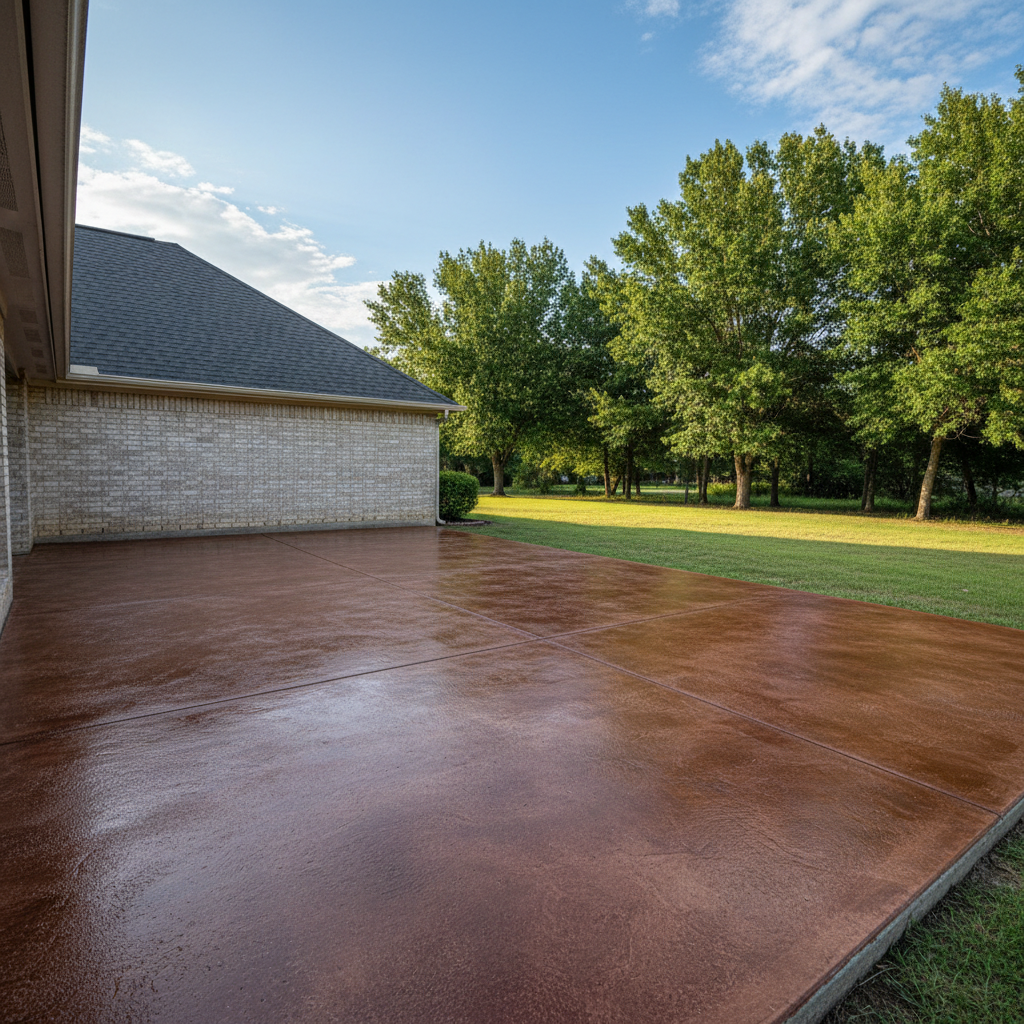
So, you've got some gorgeous stained concrete, maybe in your home, on your patio, or even in your business here in Waco. It looks fantastic, right? But it's not a 'set it and forget it' kind of deal, especially with our Texas climate. You want to keep that rich color and protective finish looking good for years, and I'm here to tell you how.
Extend the Life of Your Stained Concrete
The biggest thing you can do to make your stained concrete last is protect that top sealer coat. Think of it like the clear coat on your car's paint – it takes the brunt of the wear and tear. Here's what I've seen work:
- Re-seal Regularly: This is probably the most crucial step. For interior floors, you're probably looking at re-sealing every 3-5 years, maybe longer if it's a low-traffic area. For exterior concrete, like a patio or walkway, you'll need to do it more often, sometimes every 1-2 years. The sun, rain, and even our notorious Waco humidity are tough on sealers.
- Use Floor Protectors: On interior floors, put felt pads under furniture legs. Dragging chairs or tables without them is a surefire way to scratch the sealer, and once that's compromised, the stain underneath is vulnerable.
- Mats at Entryways: This isn't just for keeping dirt out of your house, it's also about protecting your floors. Mats catch grit and small stones that can act like sandpaper on your sealer when walked across.
- Avoid Harsh Chemicals: I'll get into cleaning more, but just know that strong acids or alkaline cleaners can strip your sealer right off. Stick to pH-neutral stuff.
Regular Maintenance: What You Need to Do
Keeping your stained concrete clean isn't rocket science, but doing it right makes a huge difference. You're trying to remove abrasive dirt and prevent spills from sitting too long.
- Sweep or Dust Mop Often: For interior floors, a daily or every-other-day sweep or dust mop is ideal. It gets rid of the loose dirt before it can get ground into the sealer.
- Damp Mop with Mild Cleaner: When you need to actually clean, use a damp mop with a pH-neutral cleaner. You can find these specifically for concrete, or just use a very diluted dish soap solution. Don't use too much water, and make sure to dry the floor if it's still pooling.
- Exterior Cleaning: For patios and outdoor spaces, a good rinse with a garden hose is often enough. For tougher spots, a soft brush and a mild detergent can work. Be careful with pressure washers – too much pressure can damage the sealer or even the concrete itself if you're not careful. Start with a wide fan tip and low pressure.
- Address Spills Immediately: This is especially important for things like oil, grease, wine, or anything acidic. The longer it sits, the more likely it is to penetrate the sealer and potentially stain the concrete itself. Blot, don't wipe, to avoid spreading the spill.
Warning Signs of Problems
Your concrete will tell you when it needs attention. You just have to know what to look for:
- Dullness or Fading: If your once vibrant color is looking a bit muted, or the sheen is gone, that's a classic sign your sealer is wearing thin. It's not protecting the stain anymore.
- Scratches and Abrasions: You might see fine lines or scuff marks, especially in high-traffic areas. These are happening on the sealer. If they go through to the stain, that's a bigger issue.
- Peeling or Flaking: This is a more serious sign. It means the sealer isn't adhering properly, possibly due to improper application or a really old, degraded coating. You'll see bits of the top coat lifting off.
- Increased Absorbency: If water used to bead up on your floor and now it just soaks in, your sealer is definitely shot. That means the concrete is exposed and vulnerable to moisture, oils, and other stains.
- White Haze (Efflorescence): Sometimes you'll see a white, powdery substance. This is salts coming up through the concrete. It's more common in areas with high moisture, and while not directly a sealer issue, it can affect the look and sometimes indicate moisture problems underneath. Our clay soil here in Waco can hold a lot of moisture, which can contribute to this.
When to Call a Professional
Look, I'm all for DIY, but some things are best left to the pros. You should definitely give Resilient Concrete Waco a call if:
- You see extensive peeling or flaking: This usually means the old sealer needs to be completely stripped before a new one can be applied, which is a messy and time-consuming job.
- There are deep scratches or actual damage to the stained concrete itself: If the color is gone in spots, it might need a touch-up or even re-staining, which takes a skilled hand to blend properly.
- You're dealing with persistent efflorescence or moisture issues: We can help diagnose the underlying problem and recommend the right solution, not just a band-aid fix.
- You just don't have the time or tools: Re-sealing a large area, especially outdoors, is a big job. We've got the equipment and the experience to get it done right and efficiently.
Taking care of your stained concrete isn't hard, but it does require a little attention. A little effort now will save you a lot of headache and expense down the road, and keep your floors looking sharp for years to come.